


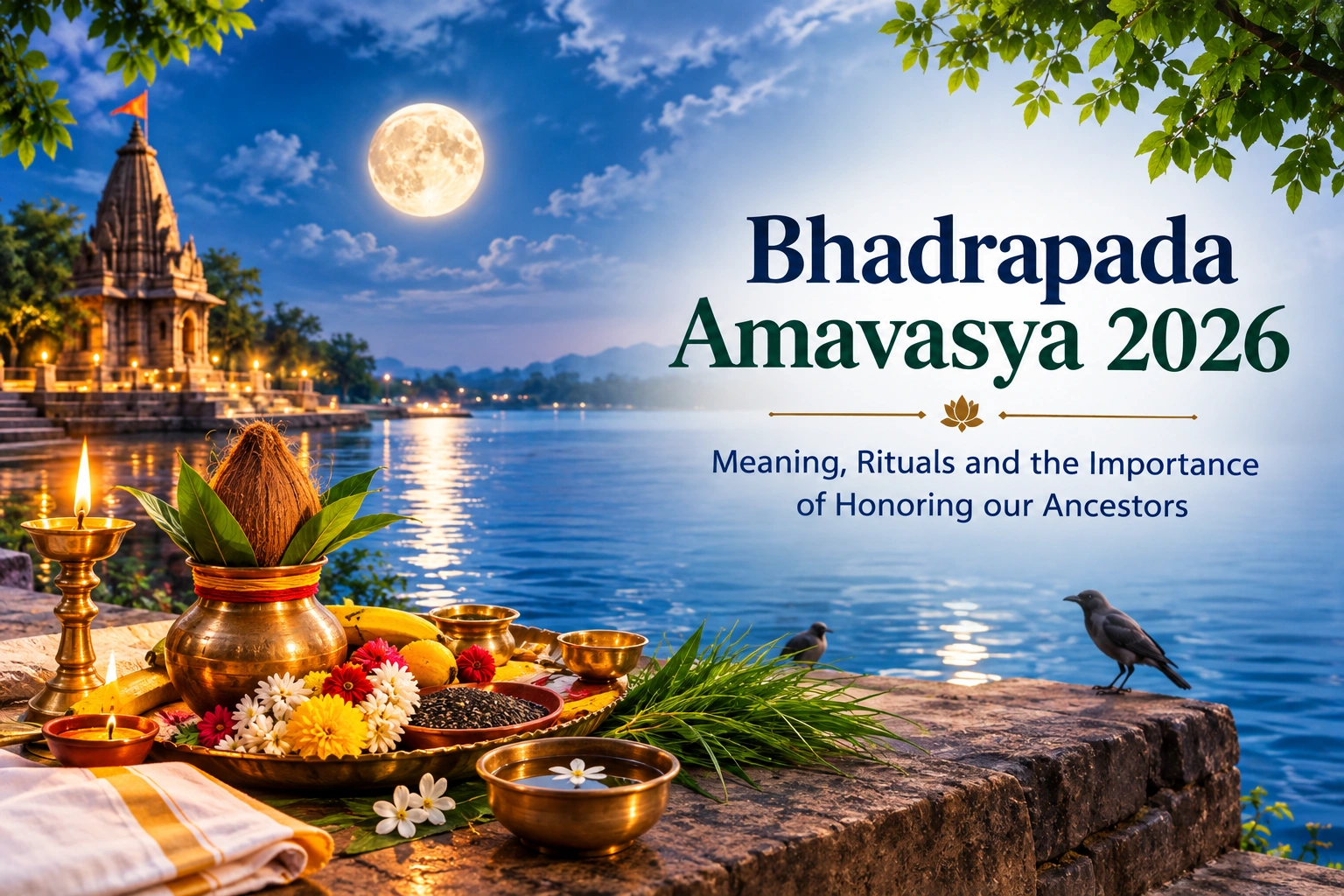
Do you feel it when Sharvan is ending? The air starts to change. That’s usually around when Bhadrapada Amavasya comes. This year it falls on Friday, 11 September 2026. The tithi actually starts the night before around 10:34 pm on 10 September and runs till about 8:56 the next morning. Since we go by udaya tithi (whichever tithi is active when the sun rises), the 11th is what gets observed. Bathing, tarpan, and donating essential items all of this happens on the 11th.
What is Bhadrapada Amavasya and why is it important?
Amavasya happens every single month, so there’s nothing rare about that part. But this one, the Bhadrapada one, has more riding on it. In Maharashtra, Karnataka, Gujarat and parts of Andhra and Telangana too – this is when Shravan finally comes to an end. And anyone who’s fasted or cut back on food for a whole month knows that it feels like a small relief in itself. There’s also the belief that on Amavasya, our ancestors are somehow closer to us than usual, which is really the core reason this day matters so much. Add to that Ganesh Chaturthi arriving right after, and the whole thing starts feeling like a doorway- one part of the year closing, another beginning.
Date and Timing of Bhadrapada Amavasya 2026
On Bhadrapada Amavasya, it will begin at 10:34 PM on September 10 and end at 8:56 AM on September 11. With sunrise, we decide the day and count Friday the 11th.
Morning things, the bath, and offering water to the sun happened right after sunrise. Tarpan, though, is usually better done later, somewhere in the early to mid-afternoon. Timings shift a little by city, so it doesn’t hurt to check yours before starting anything.
Rituals and Significance of The Day
A few names are used for this day, depending on who you ask. Bhadrpada amavasya is also called pithori amavasya. Pithori Amavasya is one – mothers fast and pray to different forms of Durga, hoping for their kids to stay healthy and live long. Nothing loud about it, just a quiet thing done at home. Then there’s Kush Grahani, or Kushotpatini Amavasya- the day for collecting kusha grass, which gets used all year in havans and shraddh. There’s a small prayer said before pulling it out, something about Rudra, Keshav, and Brahma residing in the tip, middle, and root of the grass. Then it’s pulled gently, roots and all, while chanting “Om Hum Phat.” Has to be green, clean and whole; nothing picked off the roadside counts.
For ancestors, tarpan is the main event. Water is offered along with a line like this:
ॐ पितृभ्यः स्वधायिभ्यः स्वधा नमः।
पितामहेभ्यः स्वधायिभ्यः स्वधा नमः।
प्रपितामहेभ्यः स्वधायिभ्यः स्वधा नमः॥
It’s a salutation to father, grandfather, and great-grandfather offering them swadha, the water offering, out of respect. Some families do pind daan alongside this or offer sesame seeds in water. And in the evening, a lot of people still light a mustard oil lamp near a Peepal tree and circle it seven times. Old habit, still going strong.
Types of Donations Considered Auspicious
Giving is the biggest part of this whole day. There’s an old shlok people bring up to explain it:
स्वर्गायुर्भूतिकामेन तथा पापोपशान्तये।
मुमुक्षुणा च दातव्यं ब्राह्मणेभ्यस्तथार्हवत्॥
It means if you want heaven, longer life, prosperity, or just some relief from past mistakes, give something sincerely to someone who deserves it. On this amavasya, things that usually look like food grains, sesame seeds, clothes, and water may be fodder for cows. Some people just leave food out for crows or dogs near the house. Others put money or resources into helping the underprivileged or differently abled, which does two things at once: it really honors the ancestors and actually helps someone alive right now.
How to Celebrate Bhadrapada Amavasya at Home
Bathe before sunrise and a little Gangajal in the water if you have it. Offer water to the rising sun. Do tarpan in the early afternoon if that’s part of your family’s practice. Give away food, clothes, or a bit of money to someone who needs it. Light a lamp near a Peepal tree in the evening if you can manage it. That’s it, really- no priest required, no Sanskrit needed, just some time and actually meaning what you’re doing.
At the end of it all, this day was never really about getting every ritual perfect. At the end of it all, this day was never really about getting every ritual perfect. This is a time to remember and honor our ancestors.
FAQs
Q. When is Bhadrapada Amavasya in 2026?
A. Bhadrapada Amavasya will be observed on Friday, 11 September 2026.
Q. What is another name for Bhadrapada Amavasya?
A. Bhadrapad Amavasya is also known as Pithori Amavasya, Kushotpatini or Kush Grahani Amavasya, too.
Q. When’s the best time to do tarpan on this day?
A. Early to mid-afternoon, usually. Worth checking sunrise time for your own city, though, since it moves a bit.
Q. Why is kusha grass collected specifically on this day?
A. It’s seen as the best day for it – the grass gathered now gets used right through the year in havans, tarpan and shraddh ceremonies.
Q. What donations are considered right for Bhadrapada Amavasya?
A. Food grains, sesame seeds, clothes, water, and support for cows or people in need- including the underprivileged and differently-abled are all seen as meaningful here.