


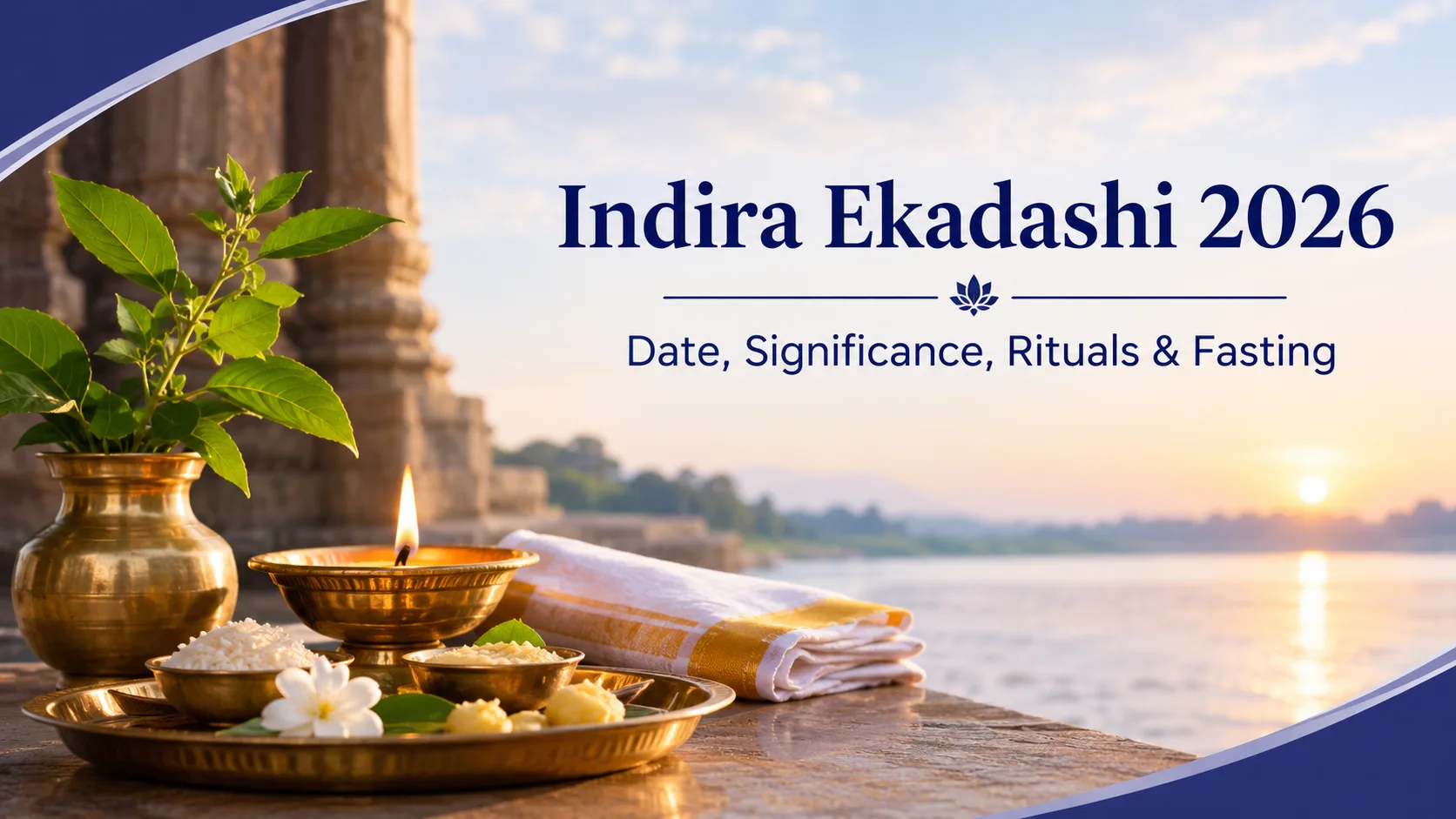
Indira Ekadashi falls on 6 October 2026. In Hindu tradition, the holy period begins at sunrise. This specific time, known as Udaya Tithi, marks the start of the day’s rituals. So, you should observe your fast on 6 October. You can break your fast in the morning between 6:26 AM and 8:49 AM. To ensure you follow the exact rituals for your area, please check your local Panchang. The timings can vary based on your location.
This Ekadashi is special. It falls during Pitru Paksha, a time dedicated to remembering and honoring ancestors. Most Ekadashis focus on personal spiritual merit. This one is different. It blends devotion to Lord Vishnu with respect for our ancestors.
Devotion to Lord Vishnu
The heart of the observance remains worship of Lord Vishnu. Devotees bathe at dawn and wear fresh clothes. They also make a vow and then perform the traditional worship of the Lord. Offerings often include yellow flowers, sandalwood paste, rice grains, incense, a lamp, and food. Tulsi leaves are considered auspicious. During the day, devotees should aim for a sattvic mindset. They can chant the name of Vishnu, read the Vishnu Sahasranama, or listen to related stories.
Indira Ekadashi Significance
Indira Ekadashi happens during Pitru Paksha. It falls on the Krishna Paksha, or dark fortnight, of the Ashvin month. That is what makes it unique compared to other Ekadashis in the year. Most Ekadashi fasts are associated with spiritual growth. This one, though, is also closely associated with remembering and honoring ancestors.
An old story tells of King Indrasena. His father was trapped in Yamaloka. When the king observed the fast for him, his father was finally freed and reached Vishnu’s abode.
Charity on Ekadashi
This tradition links charity with the merit associated with the fast. It shows that giving is also considered an important part of spiritual practice. True charity is an act of care. When you give on Ekadashi, your kindness becomes a way to support others. Giving food or essentials supports those in need. Your generosity provides more than items; it offers hope. When you share what you have, you can help others and contribute to the well-being of the community.
The spirit behind it matters as much as the act. Giving should come from gratitude and humility, not from a sense of doing someone a favor.
The idea is rooted in a well-known verse from the Manusmriti, which describes how the path to human welfare has shifted across the four ages: tapas in Satya Yuga, knowledge in Treta Yuga, sacrificial rites (yajna) in Dvapara Yuga, and in the current age of Kali Yuga, charity (daan) is held up as a primary means of spiritual good.
What People Typically Give
- 1. Food and grain donations — feeding the hungry or sharing meals with family and neighbors.
- 2. Til (sesame seeds) and water — offered during ancestral rituals connected to Pitru Paksha.
- 3. Clothes and daily essentials — given to those in need.
- 4. Support for organized food service efforts — many devotees choose to donate to meal programs for underprivileged or differently abled children as a way of extending the day’s spirit of service beyond their own household.
Closing the Fast
On Dwadashi, the day after Ekadashi, devotees bathe again, offer a final prayer to Lord Vishnu, and then break the fast within the prescribed Parana window. It is considered meaningful to give something to someone in need either just before or alongside breaking the fast, closing the observance in the same spirit of generosity that framed it throughout the day.
The Deeper Idea
Fasting on Indira Ekadashi is meant to bring restraint, remembrance of the divine, and self-reflection—a chance to step back from daily distractions and turn the mind toward devotion. Charity extends that inward discipline outward.
The essence of this day is not just what you give up, but what you choose to give.