


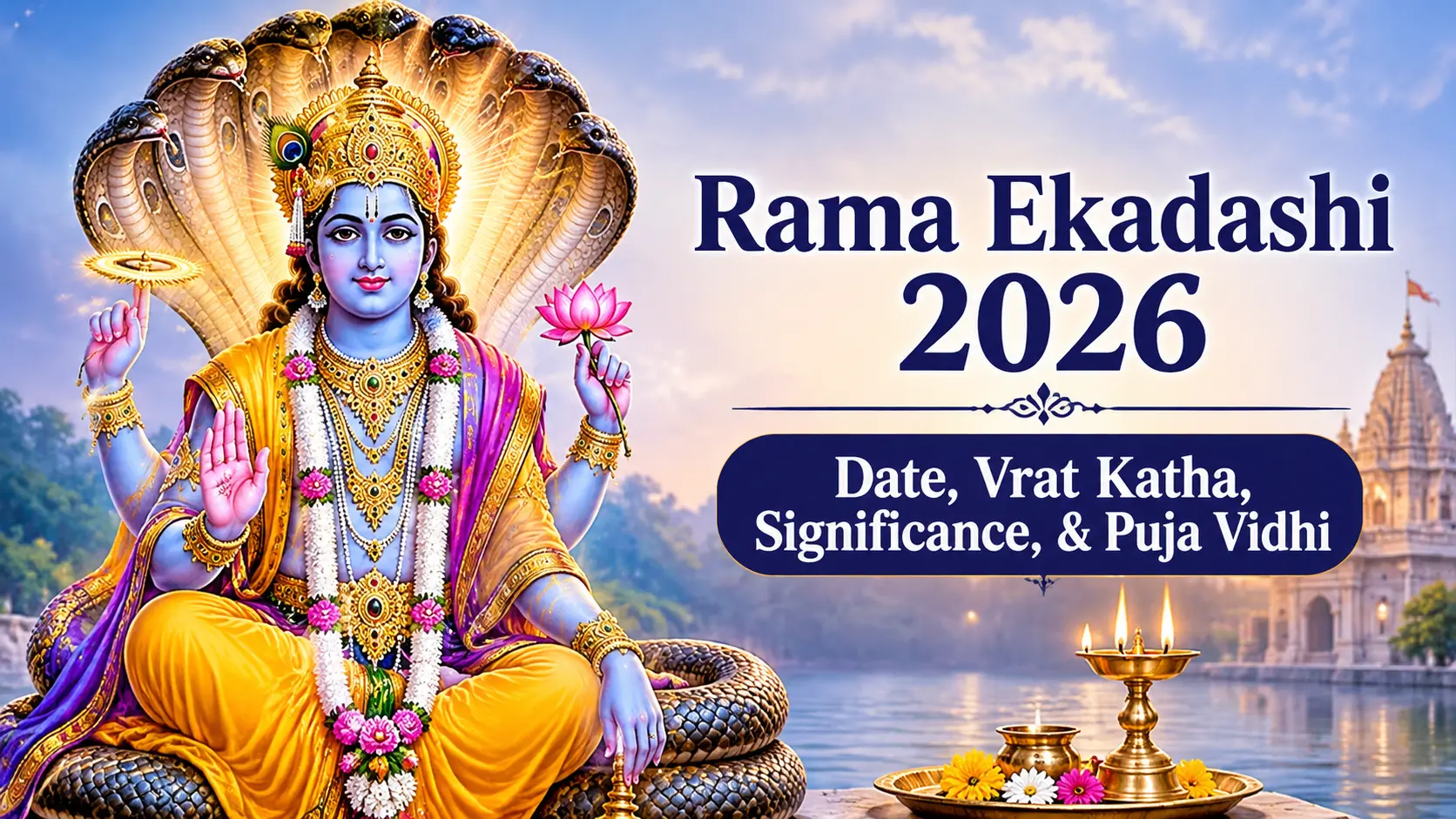
Diwali gets all the attention in early November. The shopping, the cleaning, the sweets. Yet a few days before all that begins, thee’s day many families set aside for a simple fast, and its called Rama Ekadashi. It comes on the eleventh day of the dark fortnight of Kartik and is meant for Lord Vishnu. Some say the name points to Goddess Lakshmi, which is why people tie to a peaceful, well fed home.
Never kept an Ekadashi before? You should try this fast, its good.
Rama Ekadashi 2026 Date and Tithi
Let’s get the dates out of the way. The vrat falls on Thursday, 5 November 2026. These are New Delhi Timings:
Ekadashi Begins :11:03 AM, 4 November
Ekadashi ends: 10:35AM, 5 November
Parana Day: Friday, 6 November
Parana Time; 6:37 AM to 10:15 AM
You may see November on some calendar while looking up the Rama Ekadashi 2026 date. Don’t panic. Some calendars count the tithi in a different way. And break the fast only on Dwadashi, after Hari Vasara has passed.
Significance of Rama Ekadashi
Ekadashi celebrate to Vishnu. The elders in our families always said a fast kept honestly burns away old faults, and the scriptures go further and say even very heavy ones. You can believe that fully or hold it a little lightly. Either way the day does you good. You eat less, you speak less and you finally sit still. And since Rama Ekadashi lands right before Diwali, when the house is chaos, that bit of stillness is worth more than it sounds.
Rama Ekadashi Vrat Story
King Muchukunda ruled a kingdom where everyone kept Ekadashi. No grain was cooked that day, not in ay house. His daughter Chandrabhaga was married to Shobhana, the son of King Chandrasena.
Shobhana once arrived for a visit right on Ekadashi. He was a frail man and hunger troubled him badly. Chandrabhaga told him plainly. Either go elsewhere for the day, or fast with us. He stayed. He fasted. By dawn he was gone.
She didn’t break. She stayed at her father’s house and kept her own vows.
Shobhana, in the meantime, woke up as king of a golden city on Mandrachal mountain. It was beautiful but shaky, ready to disappear at any moment, because he would fastest out of fear and not out of faith.
A Brahmin named Soma Sharma, travelling on a pilgrimage, found the city and recognised the king. He carried the news back to Chandrabhaga. She gave her husband the merit of every Ekadashi she would kept since she was a girl. The city grew firm, and she joined him there.
The lesson is simple. A fast kept willingly counts for more than one kept grudgingly, and the good you have saved up on life someone you love.
Rama Ekadashi Vrat Vidhi and Rituals
Here are the steps, in order:
- Dashmi Evening: On this evening eat light food and avoid rice. Pluck tulsi leaves day before, because they should not be plucked on Ekadashi.
- Ekadashi Morning: Wake up early and take a bath. Wear clean clothes and take your sankalp. That’s just a quiet promise to yourself that you will keep the fast.
- Puja: Put Lord Vishnu’s picture or idol in a clean corner. Offer tulsi, yellow flowers, a diya incense and fruit.
- Prayer: While you perform puja, chant mantra “ Om Namo Bhagavate” and read or listen to the Rama Ekadashi vrat katha.
- The fasting rules are simple: No grains, rice, pulses, onion, or garlic. Some people drink only water, while others have fruit and milk. Choose what feels right for your body.
- Evening: In the evening, light a diya and sing a bhajan or two. Staying up for prayer is nice but not necessary.
- Dwadashi morning: Bathe. Do a puja. Then, break the fast during the parana window.
Conclusion
Rama Ekadashi doesn’t ask for much. A diya for Vishnu ji, A lighter plate of food and a claim hour before the festival rush swallows your week. Keep the full fast if you can. If not, pray for just ten minutes if thats all you have. Both count, as long as your heart is in it.
So this year, before Diwali takes over, give Rama Ekadashi one quiet day and see what it does for you.