


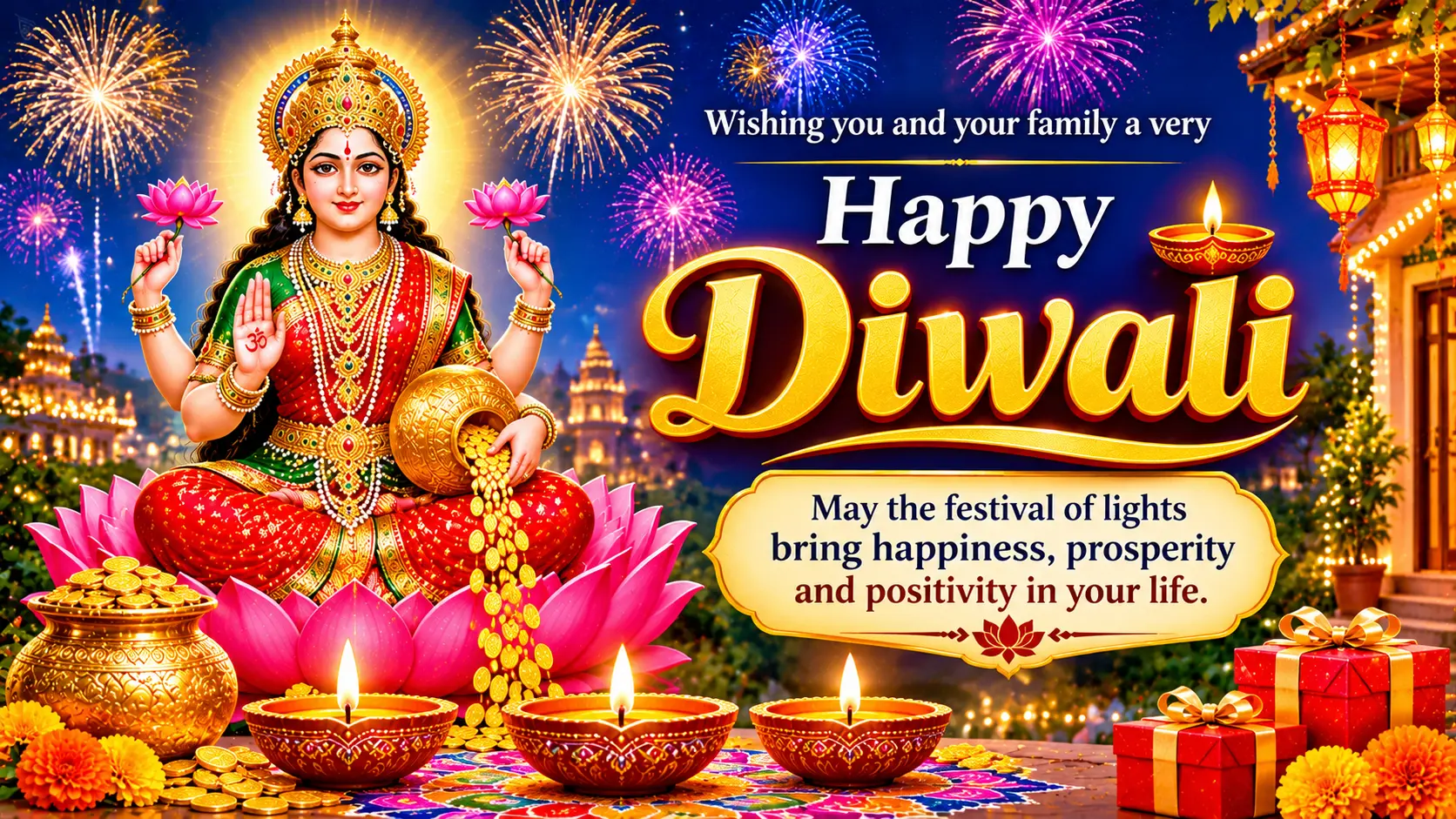
Diwali is the biggest festival in India. Many Indians celebrate it in abroad, too. The word come from sanskrit and means a row of diyas. Diyas represent knowledge and awareness.
The festival shows the win of both over darkness and ignorance.
It usually lasts five days. The third day, the moon light of kartika, is the main one and in 2026 that’s 8 november. Before it comes the cleaning , then the decorating homes, temples, streets and workplaces with earthen diyas and lights. Children light fireworks, and the noise is said to scare away evil spirits.
Why Do People Celebrate diwali?
Ask peoples and they will tell you about ramayan story. After 14 years in the forest, he flew back to ayodhya with sita and lakshmana on the pushpaka chariot. On the way they stopped at sage bharadvaja’s ashram. Hanuman went ahead to tell bharat, who had been chanting rama’s name through all the years and was overwhelmed by the news.
Ayodhya didn’t wait quietly. Conches, drums, flags. Garlands, women throwing petals from balconies, and a crowd shouting rama’s name. Diwali is meant to be that welcome repeated each year, roughly 20 days after vijaya dashmi.
That’s only one version, though. Some people celebrate krishna win over demon narakasur. Others celebrate lakshmi, and in bengal it’s kali. Many people also remember the damodara lila, when little krishna broke a pot of curd and yashoda tied him to a mortar. Jains and sikhs have their own reasons, mahavira’s moksha for one, and bandi chhor divas for the other.
What is the significance of diwali?
The textbook answer is win over evil, light over darkness, knowledge over ignorance. Fair enough, but each day of the festival has its own story attached.
Dhanteras comes first, and its about dhanvantari, the god of ayurveda. He rose from the ocean holding a pot of amrita when the gods and demon were churning it. Lakhsmi is said to have come out of the same ocean on the same day. Next is Naraka Chaturdashi, for krishna’s victory over Narakasura. The third day is for lakshmi herself, the goddess of wealth. Goverdhan puja follows and bhai dooj closes things out.
There’s a practical side too. Businesses treat this as the start of the new financial year. People meet relatives they haven’t seen in months, hand over sweets and swap gifts.
How is Diwali Celebrated in India?
It start with a very thorough clean. The belief is that lakshmi only walks into a spotless house, so walls get repainted, cupboards get emptied, and whatever isn’t needed gets given away.
After that, decoration. Diyas go on the doorstep and windowsills. Rangoli is drawn at the entrance with coloured powder, flowers or rice flour. LED strings have taken over a lot of this work, but plenty of homes still light a few clay lamps as well.
On the main night, the family sits down for lakshmi puja. The spot is cleaned first, prayers are read together, sweets are offered, and after the aarti everyone takes blessings and then goes straight for the mithai. Some people also keep the vaibhava lakshmi vrat, a one day fast. Its said that fasting on Diwali counts for 21 ordinary fasts.
Over the next few days, boxes of sweets keep moving between houses, along with gifts and visits.
Children enjoying lighting Firecrackers. But in some states the air gets polluted because of crackers after diwali and then states restrict them. Some families have moved to green crackers. Others have stop completely.
Diwali Celebration Across India
Day 1 – Dhanteras
Dhanteras falls on the 13th day of the dark fortnight. Which we called dhanteras. This day is auspicious, and people buy utensils, gold coins or jewellery and many traders open their new account books around them.
Day 2 – Roop Chaudas / Narak Chaturdashi
People take an oil bath, put on new clothes and buy sweets. Some offer Yamatarpan to lord Yama so that death doesn’t come early. In many homes, the mother does aarti for her children to mark krishna’s victory over narakasura.
Day 3 – Diwali
The new moon night and the main day of the festival. Families clean the house, light diyas and do Lakshmi Puja in the evening, then share sweets.
Day 4 – Govardhan Pooja
It honors Krishna lifting Govardhan Hill. The main offering is a large spread of food.
Day 5 – Bhai Dooj
On this day, Sisters put a tika on their brothers’ and foreheads, and the brothers give gifts and promise to look out for them.
A few places do it in their own way. Ayodhya has its deepotsav on the saryu, with lakhs of lamps. Goa burns tall narakasur effigies before sunrise on naraka chaturdashi. And in amritsar the golden temple is lit with thousands of lamps for bandi chhor diwas.
Conclusion –
Diwali is just edge of corner. Sweets come from shops, greetings come on phones, and the cracker count keeps dropping. Still, the basics haven’t changed. A clean house, a few lit lamps, and everyone sitting at one table. For a few days people are just a bit kinder to each other, and that’s reason enough for the festival to last.