


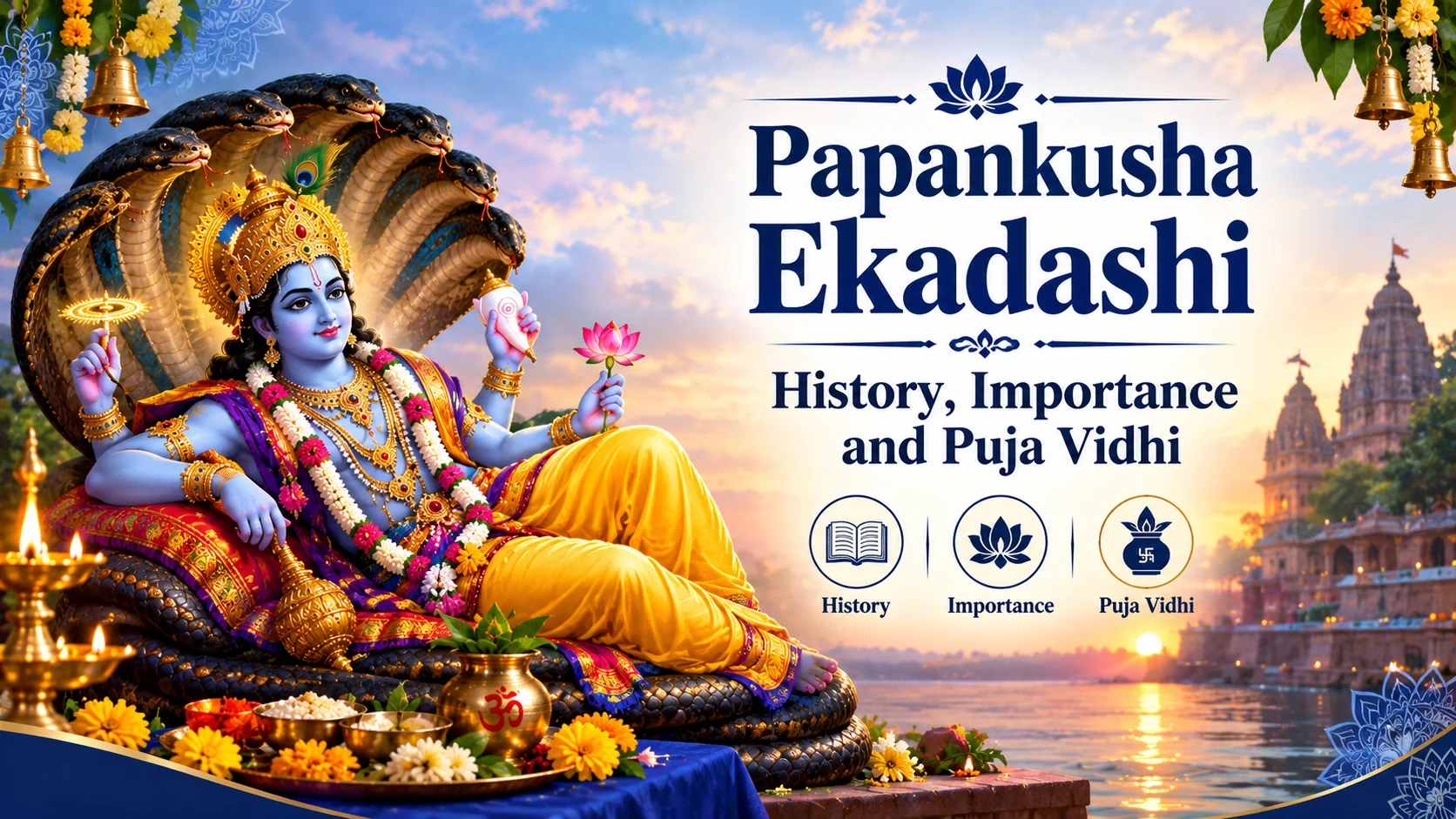
Papankusha Ekadashi comes on the eleventh day (Ekadashi) of the Shukla Paksha during the Hindu month of Ashwin, just after Dussehra. In 2026, Dussehra falls on 20 October, and Papankusha Ekadashi is on Thursday, 22 October, in India.
If you live outside India, the date can change. Some US Panchang lists Wednesday, 21 Oct as the fasting day, with Parana on the 22nd.
Introduction to Papankusha Ekadashi
The name “Papankusha” is derived from two Sanskrit words. Papa means sin, and ankusha is the iron hook a mahout uses to control an elephant. Symbolically, Papankusha Ekadashi represents the restraint of negative tendencies and the pursuit of spiritual purification. It is also said to help a devotee gain control over the senses.
Like all Ekadashi vrat, it is dedicated to Lord Vishnu. On this day, devotees worship him as Padmanabha.
Importance
The scriptures describe the spiritual significance of this vrat in considerable detail. The Brahma Vaivarta Purana says Krishna told Yudhishthira that its merit equals 100 surya yajnas or 1,000 ashwamedha yajnas. These traditional comparisons emphasise the spiritual merit associated with observing this vrat.
People observe it for a few reasons. Many want forgiveness for things they did wrong, knowingly or not. Others keep it because Ekadashi is the day for Vishnu, and Papankusha is one of the 24 in a year. And it falls right after the noisy days of Navratri and Dussehra, so the observance offers devotees an opportunity for prayer, reflection and spiritual discipline.
Papankusha Ekadashi Vrat Katha
The Papankusha Ekadashi vrat katha begins with Yudhishthira asking Krishna about the ekadashi of Ashwin’s silver half. Krishna then tells him about a hunter named Krodhana who lives in the Vindhya hills.
Krodhana spent his whole life hurting people and animals, stealing and never thinking twice about it. As he approached the end of his life, he became fearful of the consequences of his actions. He feared the spiritual consequences of the actions he had committed throughout his life. He went looking for a sage.
Sources name the sage differently. Many say Angira, while the Brahma Vaivarta Purana version has Chyavana. In both, the sage felt pity for him and told him to keep the Papankusha Ekadashi fast with full faith. Krodhana did as he was told. The story says his sins were washed away, and when he died, he went to Vaikuntha.
A few things stand out from the story.
The story emphasises the possibility of spiritual transformation and redemption. A man who did nothing good for decades still got a way out.
Sincerity matters more than getting every ritual right. Krodhana was not portrayed as a learned scholar; instead, the story emphasises his sincere observance of the vrat.
The story encourages people to practise self-discipline and positive conduct rather than waiting until a crisis arises.
Rules of Sacred Day
Fasting rules – Many people eat light on Dashami, the day before. On Ekadashi, grains like rice and wheat are avoided, along with pulses, onion, garlic, and non-veg food. Some keep a full fast without even water. Others eat fruit, milk, sabudana, or kuttu. If you are old, unwell, or pregnant, Devotees who cannot observe a strict fast may follow a lighter form of fasting according to their health and family traditions. Some devotees practise silence, known as mauna, to encourage self-control and spiritual reflection.
Puja – On this day, wake up early, bathe, and wear clean clothes. Place an image or idol of Lord Vishnu in a clean prayer area, light a diya and incense, and offer flowers according to family tradition. Padmanabha is worshipped with incense, flowers, and lamps. Tulsi leaves are usually offered too. Chant “ Om Namo Bhagavate Vasudevaya” or read the Vishnu sahasranama, then read or listen to the katha. Many families do an aarti in the evening and sing bhajans.
Parana – Parana refers to the ritual breaking of the Ekadashi fast on Dwadashi during the prescribed auspicious time. Don’t break it during hari vasara. A plain satvik meal is the usual way to end the fast.
Daan – Charity and acts of service are important aspects of this vrat. Traditionally, people give gold, sesame seeds, or food to the needy. Devotees may express generosity by feeding the hungry, donating clothing or supporting charitable initiatives according to their means.
Religious Significance and Benefits
Faith is the first thing here. Giving a whole day to one deity changes how the day feels, even if you are busy the rest of the year. The fast also teaches self-control. Skipping grains and taking less sounds small, but it is hard on a normal weekday, and some people find it carries over into other habits.
Lastly, the vrat is about seeking blessings and forgiveness. Many devotees use the occasion to seek forgiveness, resolve conflicts and renew their commitment to positive conduct. Devotees believe the blessings of Vishnu bring peace of mind and, over the long run, moksha.
Conclusion
Papankusha Ekadashi is about the idea that a person can change. Krodhana’s story shows it clearly, and it is why the vrat is still kept every year. Whether observing a strict fast or following a lighter form of worship, devotees are encouraged to observe the occasion with sincerity and devotion. Check your local panchang for the right date and parana time, and follow the customs and traditions observed by your family or religious community.