


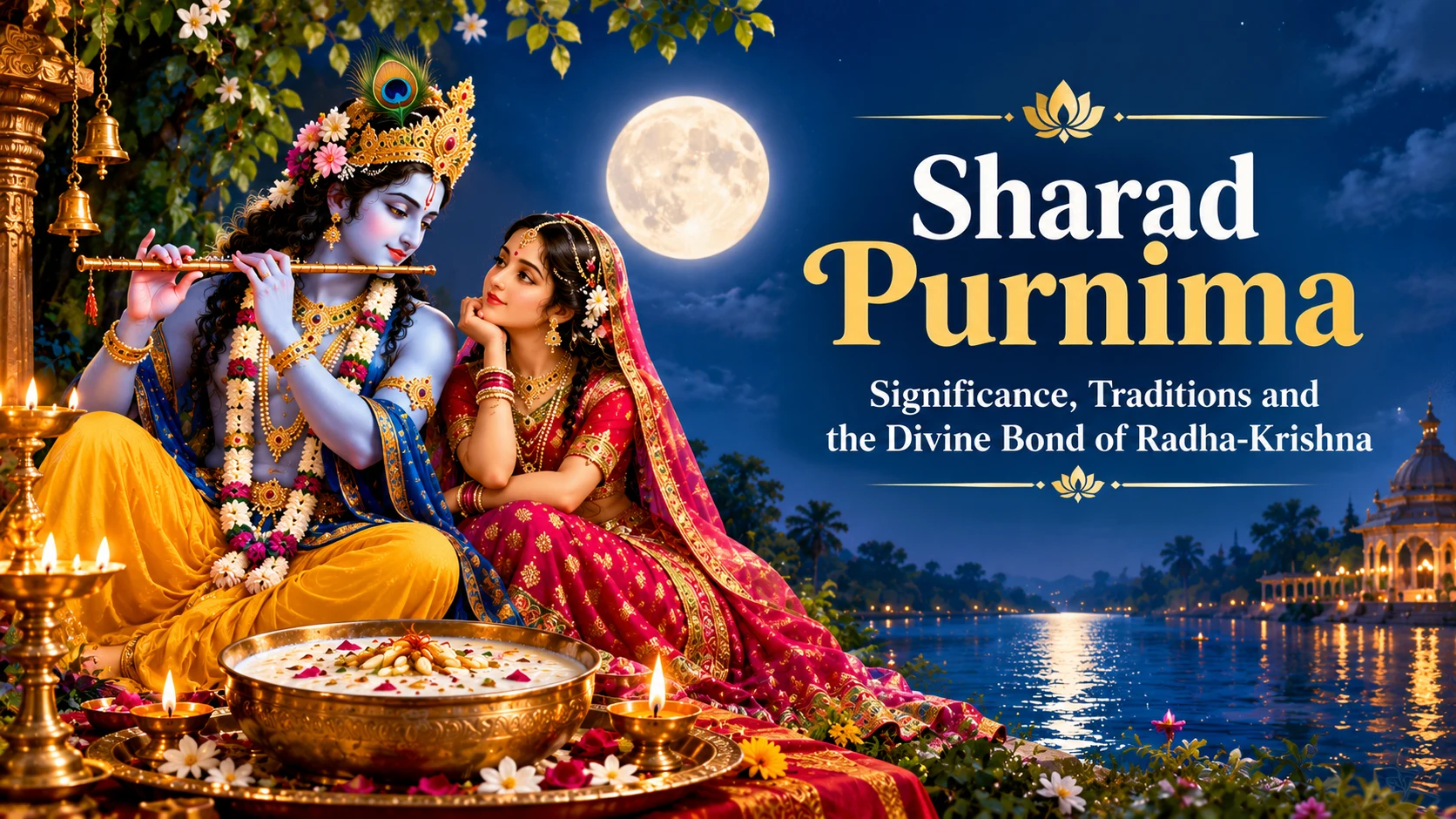
In Indian culture, some festivals hold a significance that goes far beyond religious rituals. They connect us with nature, faith, and self-reflection. Sharad Purnima is one such sacred occasion. As the monsoon season comes to an end and autumn begins, the sky becomes clear, the earth is bathed in the soft glow of the full moonlight, and a sense of peace fills the atmosphere. During this beautiful time, the mind naturally turns towards the divine. The night of Sharad Purnima reflects this very feeling—a night when the beauty of nature and spiritual awareness seem to blend into one.
According to the Hindu calendar, Sharad Purnima falls on the full moon day of the Ashwin month. It is also known as Raas Purnima, Kojagari Purnima, and Kaumudi Mahotsav. This occasion holds a special place in the hearts of devotees across India. Its significance is associated not only with the enchanting beauty of the full moon but also with the divine pastimes of Lord Krishna, the worship of Goddess Lakshmi, and prayers for peace and prosperity in life.
The Moonlight and the Light Within
The mention of Sharad Purnima brings to mind a beautiful night bathed in soft, milky-white moonlight. According to popular belief, the moon is believed to shine with all sixteen of its divine phases on this night. In Indian religious traditions, the moon represents calmness, gentleness, and the human mind. Its soothing light is not merely a beautiful sight to behold; it also reminds us of the inner peace that people spend their lives searching for.
Modern life is often filled with constant activity, competition, and countless worries. At such a time, Sharad Purnima offers us an opportunity to pause and look within ourselves. The gentle moonlight seems to remind us that being a source of light does not simply mean shining brightly; it also means bringing peace to others. Just as the moon spreads its gentle glow through the darkness, we too can brighten the lives of others through kindness, compassion, and selfless service.
The Raas Leela of Lord Krishna
Sharad Purnima is deeply associated with the divine Raas Leela of Lord Krishna. The Raas Leela, described in the Tenth Canto of the Shrimad Bhagavata Mahapurana, is one of the most significant episodes in the tradition of devotion. According to religious belief, Lord Krishna performed the Maha Raas with the gopis in Vrindavan on a beautiful autumn night.
The image of the gopis being drawn towards Lord Krishna by the enchanting melody of his flute is regarded as a symbol of unconditional and selfless love. It represents a form of devotion in which there is no place for ego or selfish desires. This love is not driven by the desire to receive something in return but by a deep sense of surrender and dedication. Perhaps this is why the Raas Leela has remained alive for centuries through classical dance, folk traditions, and devotional celebrations.
True devotion reveals itself when love fills the heart, humility shapes our behaviour, and a spirit of surrender becomes part of our lives. Faith in God becomes truly meaningful when it is reflected in our actions and in the way we treat others.
Worship of Goddess Lakshmi and Kojagari Purnima
Sharad Purnima is also considered an auspicious occasion for worshipping Goddess Lakshmi, the goddess of wealth and prosperity. A popular religious belief explains why this festival is known as Kojagari Purnima. The Sanskrit phrase ‘Ko Jagrati?’ means ‘Who is awake?” According to popular belief, Goddess Lakshmi blesses devotees who remain awake in prayer during this sacred night. For this reason, many people perform Lakshmi Puja, sing devotional songs, and participate in religious gatherings throughout the night.
However, prosperity is not limited to wealth and material possessions. Love within a family, contentment in the heart, honesty in our actions, and the ability to understand the suffering of others are also valuable forms of richness. Worshipping Goddess Lakshmi can remind us to welcome purity, generosity, and kindness into our lives. Wealth becomes truly meaningful when it is used not only for our own happiness but also to improve the lives of others.
The Tradition of Preparing Kheer and the Moon’s Nectar-Like Glow
One of the most cherished traditions of Sharad Purnima is preparing kheer and placing it under the moonlight. In many Indian households, the kheer is kept in the open air overnight and then offered as prasad the following day. According to popular belief, the moon’s rays on this night possess nectar-like qualities. This traditional belief has been passed down through generations and continues to be an important part of the festival.
When families come together to prepare prasad, offer prayers, and spend a few peaceful moments under the moonlit sky, they create a special sense of warmth and togetherness. In modern life, when families often struggle to find time for one another, such traditions offer an opportunity to strengthen relationships and create beautiful shared memories.
The true value of a religious festival is determined not only by the number of rituals we perform but also by the positive changes it inspires within us. The radiant night of Sharad Purnima encourages us to recognise the darkness within our hearts and find ways to overcome it. When we replace jealousy, anger, ego, and selfishness with compassion, forgiveness, and generosity, the spiritual message of the festival becomes part of our everyday lives.
One of the most beautiful expressions of love for God is serving humanity. Feeding someone who is hungry, supporting someone who has no one to turn to, listening to someone who is suffering, and giving hope to someone who feels discouraged are all meaningful expressions of faith. When we become a reason for happiness in someone else’s life, spirituality comes alive through our actions.
Sharad Purnima returns every year, but its message offers a fresh meaning each time. The gentle moonlight reminds us that we do not always need to shine as brightly as the sun to bring light into the world. Like the moon, we can touch hearts through calmness, kindness, and gentleness.
This is perhaps the most beautiful lesson of Sharad Purnima: let devotion fill our hearts, purity guide our thoughts, and compassion make room for others in our lives. When faith is guided by sensitivity and devotion finds expression through selfless service, the divine light of Sharad Purnima truly reaches the depths of our hearts.